The psychology of reasoning (also known as the cognitive science of reasoning) is the study of how people reason, often broadly defined as the process of drawing conclusions to inform how people solve problems and make decisions. It overlaps with psychology, philosophy, linguistics, cognitive science, artificial intelligence, logic, and probability theory. Psychological experiments on how humans and other animals reason have been carried out for over 100 years. An enduring question is whether or not people have the capacity to be rational. Current research in this area addresses various questions about reasoning, rationality, judgments, intelligence, relationships between emotion and reasoning, and development. == Everyday reasoning == One of the most obvious areas in which people employ reasoning is with sentences in everyday language. Most experimentation on deduction has been carried out on hypothetical thought, in particular, examining how people reason about conditionals, e.g., If A then B. Participants in experiments make the modus ponens inference, given the indicative conditional If A then B, and given the premise A, they conclude B. However, given the indicative conditional and the minor premise for the modus tollens inference, not-B, about half of the participants in experiments conclude not-A and the remainder concludes that nothing follows. The ease with which people make conditional inferences is affected by context, as demonstrated in the well-known selection task developed by Peter Wason. Participants are better able to test a conditional in an ecologically relevant context, e.g., if the envelope is sealed then it must have a 50 cent stamp on it compared to one that contains symbolic content, e.g., if the letter is a vowel then the number is even. Background knowledge can also lead to the suppression of even the simple modus ponens inference Participants given the conditional if Lisa has an essay to write then she studies late in the library and the premise Lisa has an essay to write make the modus ponens inference 'she studies late in the library', but the inference is suppressed when they are also given a second conditional if the library stays open then she studies late in the library. Interpretations of the suppression effect are controversial Other investigations of propositional inference examine how people think about disjunctive alternatives, e.g., A or else B, and how they reason about negation, e.g., It is not the case that A and B. Many experiments have been carried out to examine how people make relational inferences, including comparisons, e.g., A is better than B. Such investigations also concern spatial inferences, e.g. A is in front of B and temporal inferences, e.g. A occurs before B. Other common tasks include categorical syllogisms, used to examine how people reason about quantifiers such as All or Some, e.g., Some of the A are not B. For example if all A are B and some B are C, what (if anything) follows? == Theories of reasoning == There are several alternative theories of the cognitive processes that human reasoning is based on. One view is that people rely on a mental logic consisting of formal (abstract or syntactic) inference rules similar to those developed by logicians in the propositional calculus. Another view is that people rely on domain-specific or content-sensitive rules of inference. A third view is that people rely on mental models, that is, mental representations that correspond to imagined possibilities. A fourth view is that people compute probabilities. One controversial theoretical issue is the identification of an appropriate competence model, or a standard against which to compare human reasoning. Initially classical logic was chosen as a competence model. Subsequently, some researchers opted for non-monotonic logic and Bayesian probability. Research on mental models and reasoning has led to the suggestion that people are rational in principle but err in practice. Connectionist approaches towards reasoning have also been proposed. Despite the ongoing debate about the cognitive processes involved in human reasoning, recent research has shown that multiple approaches can be useful in modeling human thinking. For instance, studies have found that people's reasoning is often influenced by their prior beliefs, which can be modeled using Bayesian probability theory. Additionally, research on mental models has shown that people tend to reason about problems by constructing multiple mental representations of the situation, which can help them to identify relevant features and make inferences based on their understanding of the problem. Moreover, connectionist approaches to reasoning have also gained attention, which focus on the neural network models that can learn from data and generalize to new situations. == Development of reasoning == It is an active question in psychology how, why, and when the ability to reason develops from infancy to adulthood. Jean Piaget's theory of cognitive development posited general mechanisms and stages in the development of reasoning from infancy to adulthood. According to the neo-Piagetian theories of cognitive development, changes in reasoning with development come from increasing working memory capacity, increasing speed of processing, and enhanced executive functions and control. Increasing self-awareness is also an important factor. In their book The Enigma of Reason, the cognitive scientists Hugo Mercier and Dan Sperber put forward an "argumentative" theory of reasoning, claiming that humans evolved to reason primarily to justify our beliefs and actions and to convince others in a social environment. Key evidence for their theory includes the errors in reasoning that solitary individuals are prone to when their arguments are not criticized, such as logical fallacies, and how groups become much better at performing cognitive reasoning tasks when they communicate with one another and can evaluate each other's arguments. Sperber and Mercier offer one attempt to resolve the apparent paradox that the confirmation bias is so strong despite the function of reasoning naively appearing to be to come to veridical conclusions about the world. The study of the development of reasoning abilities is an ongoing area of research in psychology, and multiple factors have been proposed to explain how, why, and when reasoning develops from infancy to adulthood. Recent research has suggested that early experiences and social interactions play a critical role in the development of reasoning abilities. For example, studies have shown that infants as young as six months old can engage in basic logical reasoning, such as reasoning about the relationship between objects and their properties. Furthermore, research has highlighted the importance of parental interaction and cognitive stimulation in the development of children's reasoning abilities. Additionally, studies have suggested that cultural factors, such as educational practices and the emphasis on critical thinking, can also influence the development of reasoning skills across different populations. == Different sorts of reasoning == Philip Johnson-Laird trying to taxonomize thought, distinguished between goal-directed thinking and thinking without goal, noting that association was involved in unrelated reading. He argues that goal directed reasoning can be classified based on the problem space involved in a solution, citing Allen Newell and Herbert A. Simon. Inductive reasoning makes broad generalizations from specific cases or observations. In this process of reasoning, general assertions are made based on past specific pieces of evidence. This kind of reasoning allows the conclusion to be false even if the original statement is true. For example, if one observes a college athlete, one makes predictions and assumptions about other college athletes based on that one observation. Scientists use inductive reasoning to create theories and hypotheses. Philip Johnson-Laird distinguished inductive from deductive reasoning, in that the former creates semantic information while the later does not . In opposition, deductive reasoning is a basic form of valid reasoning. In this reasoning process a person starts with a known claim or a general belief and from there asks what follows from these foundations or how will these premises influence other beliefs. In other words, deduction starts with a hypothesis and examines the possibilities to reach a conclusion. Deduction helps people understand why their predictions are wrong and indicates that their prior knowledge or beliefs are off track. An example of deduction can be seen in the scientific method when testing hypotheses and theories. Although the conclusion usually corresponds and therefore proves the hypothesis, there are some cases where the conclusion is logical, but the generalization is not. For example, the argument, "All young girls wear skirts; Julie is a young
Microapp
A microapp is a super-specialized application designed to perform one task or use case with the only objective of doing it well. They follow the single responsibility principle, which states that "a class should have one and only one reason to change." Micro applications help developers create less complex applications while reducing costs by breaking down monolithic systems into groups of independent services acting as one system. A good example of Microapps would be https://docs.citrix.com/en-us/legacy-archive/downloads/microapps.pdfthat provide single purpose action from Salesforce and over 40 applications on its workspace. == Requirements and characteristics == Microapps usually are accessible on any device, display, or operating system without installation on the viewer's device. To qualify as a microapp, the entity must: be built and deployed as an independent software module bring together various media types into a single experience have advanced security and compliance features be functionally-extensible comply with granular data demands be agnostic single use case oriented Microapps differentiate from traditional web or mobile applications by how the end-user interacts with them. Consequently, they can be embedded in websites or viewed online to bypass app stores and are typically built to provide a focused experience to the user. == Usage == Microapps are typically used for commercial purposes to reduce development costs for projects not requiring the large scope of a traditional web or mobile application. In addition, they are often used to showcase in-depth information or enrich marketing material with interactivity. Lately, micro apps are being used to boost productivity by providing quick tools to people to reuse best practices. Users have been interacting with microapps for a while with suites like Microsoft 365 and Google Workspace, where each one of their end-user services could be considered as a microapp. All these microapps share a unique identity manager to provide a unified user experience. == Benefits == Replacing monolith systems with microapps provide several advantages like: Reduce complexity for developers and users. Smaller, more cohesive, and maintainable codebases Scalable organizations with decoupled, autonomous teams Allows for hyper-specialization Independent deployment Multi-stack == Cloud-native microapps == Technologies like Kubernetes, or OpenShift, allow companies to replace their monolith and legacy systems with modular software taking advantage of microapps on reducing costs and improve reliability and security. == Microapps vs. microservices == There is a widespread misunderstanding between these two concepts, which is the key difference. Microservices is an architectural style that is systems-centric, meaning it decouples the presentation and data layer using web services APIs. On the other side, micro apps behave more as a super-architecture style (that embraces microservices among other types), and it is user-centric, meaning they decouple the whole monolith system onto modules that are designed to interact with final users. Both architectural styles rely on modularity to provide high performance, scalability, and resilience. == Considerations == Developing Micro apps requires a different approach than traditional software, and user experience is crucial. The following considerations are essential for switching to microapps. To run multiple microapps is required a single identity management system. Microservices are well suited to make microapps more powerful Apps with different levels of maturity might create a non-unified user experience. Duplication of dependencies can create security issues and inefficiencies. Suitable for well-organized teams
Taylor Swift deepfake pornography controversy
In late January 2024, sexually explicit AI-generated deepfake images of American musician Taylor Swift were proliferated on social media platforms 4chan and X (formerly Twitter). Several artificial images of Swift of a sexual or violent nature were quickly spread, with one post reported to have been seen over 47 million times before its eventual removal. The images led Microsoft to enhance Microsoft Designer's text-to-image model to prevent future abuse. Moreover, these images prompted responses from anti-sexual assault advocacy groups, US politicians, Swifties, and Microsoft CEO Satya Nadella, among others, and it has been suggested that Swift's influence could result in new legislation regarding the creation of deepfake pornography. A similar controversy emerged in August 2025, when The Verge reported AI image and video tool Grok Imagine generated sexually explicit images and videos of Swift from an otherwise innocuous text prompt. == Background == American musician Taylor Swift has been the target of misogyny and slut-shaming throughout her career. American technology corporation Microsoft offers AI image creators called Microsoft Designer and Bing Image Creator, which employ censorship safeguards to prevent users from generating unsafe or objectionable content. Members of a Telegram group discussed ways to circumvent these censors to create pornographic images of celebrities. Graphika, a disinformation research firm, traced the creation of the images back to a 4chan community. == Reactions == For some, the deepfake images of Swift immediately became a source of controversy and outrage. Other internet users found them humorous and absurd, such as the image making it appear as though Swift was to engage in sexual intercourse with Oscar the Grouch. The images drew condemnations from Rape, Abuse & Incest National Network and SAG-AFTRA. The latter group, who had been following issues regarding AI-generated media prior to Swift's involvement, considered the images "upsetting, harmful and deeply concerning." Microsoft CEO Satya Nadella, whose company's products were believed to be used to make these images, responded to the controversy as "alarming and terrible", further stating his belief that "we all benefit when the online world is a safe world." === Taylor Swift === A source close to Swift told the Daily Mail that she would be considering legal action, saying, "Whether or not legal action will be taken is being decided, but there is one thing that is clear: These fake AI-generated images are abusive, offensive, exploitative, and done without Taylor's consent and/or knowledge." === Politicians === White House press secretary Karine Jean-Pierre expressed concern over the counterfeit images, deeming them "alarming", and emphasized the obligation of social media platforms to curb the dissemination of misinformation. Several members of American politics called for legislation against AI-generated pornography. Later in the month, a bipartisan bill was introduced by US senators Dick Durbin, Lindsey Graham, Amy Klobuchar and Josh Hawley. The bill would allow victims to sue individuals who produced or possessed "digital forgeries" with intent to distribute, or those who received the material knowing it was made without consent. The European Union struck a deal in February 2024 on a similar bill that would criminalize deepfake pornography, as well as online harassment and revenge porn, by mid-2027. === Social media platforms === X responded to the sharing of these images on their own website with claims they would suspend accounts that participated in their spread. Despite this, the photos continued to be reshared among accounts of X, and spread to other platforms including Instagram and Reddit. X enforces a "synthetic and manipulated media policy", which has been criticized for its efficacy. They briefly blocked searches of Swift's name on January 27, 2024, reinstating them two days later. === Swifties === Fans of Taylor Swift, known as Swifties, responded to the circulation of these images by pushing the hashtag #ProtectTaylorSwift to trend on X. They also flooded other hashtags related to the images with more positive images and videos of her live performances. == Cultural significance == Deepfake pornography has remained highly controversial and has affected figures from other celebrities to ordinary people, most of whom are women. Journalists have opined that the involvement of a prominent public figure such as Swift in the dissemination of AI-generated pornography could bring public awareness and political reform to the issue.
AI-generated content in American politics
In American politics since the 2020s, political figures have deployed AI-generated images, videos, and audio to attack opponents, create misleading narratives, or inflame emotions. The use of generative AI by American political figures has been subject to criticism from many sides of the political spectrum. Republican president Donald Trump has notably used generative AI in several posts to Truth Social during his second term, many of which have made headlines due to their inflammatory nature. == Background == Generative artificial intelligence is a subfield of artificial intelligence that uses generative models to generate text, images, videos, audio, software code or other forms of data. In the mid 2020s with the release of 15.ai, ChatGPT, DALL-E and other generative artificial intelligence applications there was an AI boom. There has been an increase of usage of generative-AI within the United States political field during this boon, with both Republican and Democratic party members using it. The Trump administration during his second term, have embraced the use of AI-generated images, causing some misinformation experts to raise concerns about the continued usage would cause the erosion of public perception of the truth. In response to some criticisms White House deputy communications director Kaelan Dorr posted on X that the "memes will continue" with White House deputy press secretary Abigail Jackson also mocking concerns. == History of usage == === 2023 === In April 2023, the Republican National Committee released an attack ad made entirely with AI-generated images depicting a dystopian future under Joe Biden's re-election. === 2024 === Generative AI has increased the efficiency with which political candidates were able to raise money by analyzing donor data and identifying possible donors and target audiences. In March 2024 Democratic consultant working for Dean Phillips has admitted to using AI to generate a robocall which used Joe Biden's voice to discourage voter participation. In August 2024, The Atlantic noted that AI slop was becoming associated with the political right in the United States, who were using it for shitposting and engagement farming on social media, with the technology offering "cheap, fast, on-demand fodder for content". AI slop is frequently used in political campaigns in an attempt at gaining attention through content farming. === 2025 === The initial version of the Make Our Children Healthy Again Assessment of children's health issues, released by a commission of cabinet members and officials of the Trump administration, and led by US Department of Health and Human Services Secretary Robert F. Kennedy Jr., reportedly cited nonexistent and garbled references generated using artificial intelligence. Democratic governor Gavin Newsom has used AI-generated images to criticize Trump. In the midst of disruptions to food stamp distribution during the 2025 US government shutdown, anonymous social media users began using OpenAI's Sora to post slop videos of welfare queens complaining, stealing, and rioting in supermarkets; many comments to the videos appeared unaware that they were AI-generated, or acknowledged that they were AI-generated but nonetheless useful in pushing a narrative of widespread welfare fraud. On September 6, 2025, Trump posted an image on Truth Social making a reference to "Chipocalypse Now". Trump's post consisted of an AI-generated image showing Trump frowning and wearing a U.S. Cavalry hat and sunglasses, in front of Lake Michigan with the city of Chicago behind him with a smoke and fire spread across the background with five U.S. Army helicopters in the sky. The words "Chipocalypse Now" are rendered in a font resembling that in which the title of the 1979 film Apocalypse Now was styled. === 2026 === On February 5, 2026, Donald Trump shared a video of Barack and Michelle Obama depicted as apes in a Truth Social post. The two-second AI-generated clip of the Obamas portrayed as apes set to "The Lion Sleeps Tonight" appeared at the end of a one-minute two second long video, the rest of which was about false claims of voter fraud during the 2020 presidential election. The post received at least 4,650 likes, 409 comments, and 1,470 reTruths before it was deleted the next morning. The short clip was part of a longer AI-generated video posted in October 2025. The post received widespread backlash and bipartisan condemnation of the video as racist. In April 2026, Trump posted a picture of himself depicted as Jesus, drawing widespread criticism from Evangelicals and Catholics, resulting in Trump deleting the post hours later and claiming he believed he was depicted as a doctor. == Examples of use == === Election campaigns === In 2023, while he was still running for re-election, the presidential campaign of Joe Biden prepared a task force to respond to AI images and videos. The campaign for the 2024 Republican nominee, Donald Trump, has used deepfake videos of political opponents in campaign ads and fake images showing Trump with black supporters. During the first five months of his second term in 2025, Trump posted several AI-generated images of himself on official government social media accounts, including him as the Pope, him as a Jedi, and him as a muscular man. In August 2024, Trump posted a series of AI-generated images on his social media platform, Truth Social, that portrayed fans of the singer Taylor Swift in "Swifties for Trump" T-shirts, as well as a photo of the singer herself appearing to endorse Trump's 2024 presidential campaign. The images originated from the conservative Twitter account @amuse, which posted numerous AI slop images leading up to the 2024 United States elections that were shared by other high-profile figures within the US Republican Party, such as Elon Musk, who has publicly endorsed the utilization of generative AI, furthering this association. In 2024, Michigan GOP candidate Anthony Hudson posted an AI-generated video showing Martin Luther King Jr. endorsing his campaign, later claiming it was uploaded by a volunteer. In his 2025 bid to be the Democratic nominee for governor of New Jersey, Rep. Josh Gottheimer drew attention and criticism when he released a TV ad that used AI to portray him as a shirtless boxer sparring with Donald Trump in a boxing ring. In November 2025, the campaign of Mike Collins, a GOP candidate in the 2026 United States Senate election in Georgia released a fake video, generated by artificial intelligence, that depicted Democrat Jon Ossoff defending his vote on the 2025 United States federal government shutdown by declaring he could never say no to Chuck Schumer and that SNAP recipients did not attend his out-of-state fundraisers. The Collins campaign also shared an AI-generated video featuring Collins as a shirtless blue jeans model, referencing an American Eagle Outfitters advertisement featuring Sydney Sweeney. During the 2026 Los Angeles mayoral election, candidate Spencer Pratt reposted an AI-generated video portraying Pratt as Batman and prominent California politicians such as Karen Bass, Gavin Newsom, and Kamala Harris, as unruly aristocrats. Former governor of Florida Jeb Bush described the ad as “maybe the best political ad of the year.” In response, a spokesperson for Bass's campaign said, he was "doing his best Trump impression." Bass further responded that the AI ads are "taking on a violent trend." === Protests === In response to the nation-wide No Kings protests in October 2025, Donald Trump posted a video depicting himself flying a fighter jet and releasing feces on crowds of demonstrators, including Democratic influencer Harry Sisson. === Foreign interference === Officials from the ODNI and FBI have stated that Russia, Iran, and China used generative artificial intelligence tools to create fake and divisive text, photos, video, and audio content to foster anti-Americanism and engage in covert influence campaigns. The use of artificial intelligence was described as an accelerant rather than a revolutionary change to influence efforts. Regulation of AI with regard to elections was unlikely to see a resolution for most of the 2024 United States general election season. === Disasters and wars === In the aftermath of Hurricane Helene in the United States, members of the Republican Party circulated an AI-generated image of a young girl holding a puppy in a flood, and used it as evidence of the failure of President Joe Biden to respond to the disaster. Some, like Trump supporter Amy Kremer, shared the image on social media but acknowledged that it was not genuine. In February 2025, Donald Trump shared an AI-generated video on Truth Social depicting a hypothetical Gaza after a Trump takeover. The video's creator claimed it was made as political satire. == Reception == Ramesh Srinivasan, a professor at UCLA raised concerns about the use of AI-generative images stating that many people are questioning where they can find trustab
AI-assisted targeting in the Gaza Strip
As part of the Gaza war, the Israel Defense Forces (IDF) have used artificial intelligence to rapidly and automatically perform much of the process of determining what to bomb. Israel has greatly expanded the bombing of the Gaza Strip, which in previous wars had been limited by the Israeli Air Force running out of targets. These tools include the Gospel, an AI which automatically reviews surveillance data looking for buildings, equipment and people thought to belong to the enemy, and upon finding them, recommends bombing targets to a human analyst who may then decide whether to pass it along to the field. Another is Lavender, an "AI-powered database" which lists tens of thousands of Palestinian men linked by AI to Hamas or Palestinian Islamic Jihad, and which is also used for target recommendation. Critics have argued the use of these AI tools puts civilians at risk, blurs accountability, and results in militarily disproportionate violence in violation of international humanitarian law. == The Gospel == Israel uses an AI system dubbed "Habsora", "the Gospel", to determine which targets the Israeli Air Force would bomb. It automatically provides a targeting recommendation to a human analyst, who decides whether to pass it along to soldiers in the field. The recommendations can be anything from individual fighters, rocket launchers, Hamas command posts, to private homes of suspected Hamas or Islamic Jihad members. AI can process military intelligence far faster than humans. Retired Lt Gen. Aviv Kohavi, head of the IDF until 2023, stated that the system could produce 100 bombing targets in Gaza a day, with real-time recommendations which ones to attack, where human analysts might produce 50 a year. A lecturer interviewed by NPR estimated these figures as 50–100 targets in 300 days for 20 intelligence officers, and 200 targets within 10–12 days for the Gospel. === Technological background === The Gospel uses machine learning, where an AI is tasked with identifying commonalities in vast amounts of data (e.g. scans of cancerous tissue, photos of a facial expression, surveillance of Hamas members identified by human analysts), then looking for those commonalities in new material. What information the Gospel uses is not known, but it is thought to combine surveillance data from diverse sources in enormous amounts. Recommendations are based on pattern-matching. A person with enough similarities to other people labeled as enemy combatants may be labelled a combatant themselves. Regarding the suitability of AIs for the task, NPR cited Heidy Khlaaf, engineering director of AI Assurance at the technology security firm Trail of Bits, as saying "AI algorithms are notoriously flawed with high error rates observed across applications that require precision, accuracy, and safety." Bianca Baggiarini, lecturer at the Australian National University's Strategic and Defence Studies Centre wrote AIs are "more effective in predictable environments where concepts are objective, reasonably stable, and internally consistent." She contrasted this with telling the difference between a combatant and non-combatant, which even humans frequently can't do. Khlaaf went on to point out that such a system's decisions depend entirely on the data it's trained on, and are not based on reasoning, factual evidence or causation, but solely on statistical probability. === Operation === The IAF ran out of targets to strike in the 2014 war and 2021 crisis. In an interview on France 24, investigative journalist Yuval Abraham of +972 Magazine stated that to maintain military pressure, and due to political pressure to continue the war, the military would bomb the same places twice. Since then, the integration of AI tools has significantly sped up the selection of targets. In early November, the IDF stated more than 12,000 targets in Gaza had been identified by the target administration division that uses the Gospel. NPR wrote on December 14 that it was unclear how many targets from the Gospel had been acted upon, but that the Israeli military said it was currently striking as many as 250 targets a day. The bombing, too, has intensified to what the December 14 article called an astonishing pace: the Israeli military stated at the time it had struck more than 22,000 targets inside Gaza, at a daily rate more than double that of the 2021 conflict, more than 3,500 of them since the collapse of the truce on December 1. Early in the offensive the head of the Air Force stated his forces only struck military targets, but added: "We are not being surgical." Once a recommendation is accepted, another AI, Fire Factory, cuts assembling the attack down from hours to minutes by calculating munition loads, prioritizing and assigning targets to aircraft and drones, and proposing a schedule, according to a pre-war Bloomberg article that described such AI tools as tailored for a military confrontation and proxy war with Iran. One change that The Guardian noted is that since senior Hamas leaders disappear into tunnels at the start of an offensive, systems such as the Gospel have allowed the IDF to locate and attack a much larger pool of more junior Hamas operatives. It cited an official who worked on targeting decisions in previous Gaza operations as saying that while the homes of junior Hamas members had previously not been targeted for bombing, the official believes the houses of suspected Hamas operatives were now targeted regardless of rank. In the France 24 interview, Abraham, of +972 Magazine, characterized this as enabling the systematization of dropping a 2000 lb bomb into a home to kill one person and everybody around them, something that had previously been done to a very small group of senior Hamas leaders. NPR cited a report by +972 Magazine and its sister publication Local Call as asserting the system is being used to manufacture targets so that Israeli military forces can continue to bombard Gaza at an enormous rate, punishing the general Palestinian population. NPR noted it had not verified this; it was unclear how many targets are being generated by AI alone, but there had been a substantial increase in targeting, with an enormous civilian toll. In principle, the combination of a computer's speed to identify opportunities and a human's judgment to evaluate them can enable more precise attacks and fewer civilian casualties. Israeli military and media have emphasized this capacity to minimize harm to non-combatants. Richard Moyes, researcher and head of the NGO Article 36, pointed to "the widespread flattening of an urban area with heavy explosive weapons" to question these claims, while Lucy Suchman, professor emeritus at Lancaster University, described the bombing as "aimed at maximum devastation of the Gaza Strip". The Guardian wrote that when a strike was authorized on private homes of those identified as Hamas or Islamic Jihad operatives, target researchers knew in advance the expected number of civilians killed, each target had a file containing a collateral damage score stipulating how many civilians were likely to be killed in a strike, and according to a senior Israeli military source, operatives use a "very accurate" measurement of the rate of civilians evacuating a building shortly before a strike. "We use an algorithm to evaluate how many civilians are remaining. It gives us a green, yellow, red, like a traffic signal." ==== 2021 use ==== Kohavi compared the target division using the Gospel to a machine and stated that once the machine was activated in the war of May 2021, it generated 100 targets a day, with half of them being attacked, in contrast with 50 targets in Gaza per year beforehand. Approximately 200 targets came from the Gospel out of the 1,500 targets Israel struck in Gaza in the war, including both static and moving targets according to the military. The Jewish Institute for National Security of America's after action report identified an issue, stating the system had data on what was a target, but lacked data on what wasn't. The system depends entirely on training data, and intel that human analysts had examined and deemed didn't constitute a target had been discarded, risking bias. The vice president expressed his hopes this had since been rectified. === Organization === The Gospel is used by the military's target administration division (or Directorate of Targets or Targeting Directorate), which was formed in 2019 in the IDF's intelligence directorate to address the air force running out of targets to bomb, and which Kohavi described as "powered by AI capabilities" and including hundreds of officers of soldiers. In addition to its wartime role, The Guardian wrote it'd helped the IDF build a database of between 30,000 and 40,000 suspected militants in recent years, and that systems such as the Gospel had played a critical role in building lists of individuals authorized to be assassinated. The Gospel was developed by Unit 8200 of the Israeli Intelligence C
PeduliLindungi
SatuSehat (Indonesian for "one health"), formerly PeduliLindungi (roughly "care to protect"), is a national integrated health data exchange platform, jointly developed by the Indonesian Ministry of Communication and Information Technology (Kemenkominfo), in partnership with Committee for COVID-19 Response and National Economic Recovery (KPCPEN), Ministry of Health (Kemenkes), Ministry of State-Owned Enterprises (KemenBUMN), and Telkom Indonesia. The SatuSehat platform aims to facilitate data accessibility and service efficiency for health providers and the government, and assist the public as a tool to access their own electronic medical record data. This app was the official COVID-19 contact tracing app used for digital contact tracing in Indonesia, and originally known as TraceTogether but later changed because Singapore had its app using the same name. == Implementation == On 23 August 2021, Coordinating Minister for Maritime and Investments Affairs, Luhut Binsar Panjaitan, encouraged the government to make this app a mandatory requirement before using public transportations, such as train, bus, ferry, and plane. Furthermore, citizen must have installed the app before entering shopping malls, factories, and sport venues. Every person who have received at least a dose of vaccine will receive a vaccine card and vaccination certificate which can be downloaded from the app. In December 2022, with the revocation of PPKM (Community Activities Restrictions Enforcement) starting from 1 January 2023, Ministry of Health issued a statement that the usage of the app is not a governmental mandatory requirement as it used to be. === Transition into a citizen health app === On 7 September 2022, it was announced that the app would be modified to become a citizen health app, capitalising on the reach of the app and the existing work done around the app. On 28 February 2023, the authorities announced that the app was rebranded to SATUSEHAT Mobile (lit. 'OneHealth Mobile'), with existing users needing to update the PeduliLindungi app and re-synchronise their COVID-19 related health information. The re-branded app would eventually be an all-in-one health service and records retrieval app for Indonesians. == Controversy == It was reported that the app requires continuous access to the phone's files, media, and GPS, which quickly drains the battery. Allowing location access only during use or denying it altogether will render the app unusable. This stands in stark contrast to COVID-19 apps used in other countries that only utilize Bluetooth and do not require any additional permissions. In September 2021, stored personal data of at least 1.3 million Indonesian residents were leaked online, including the vaccine certificate of President Joko Widodo. The data leak was also reported on eHAC (electronic Health Alert Card), a mandatory app used for air passengers.
Clanker
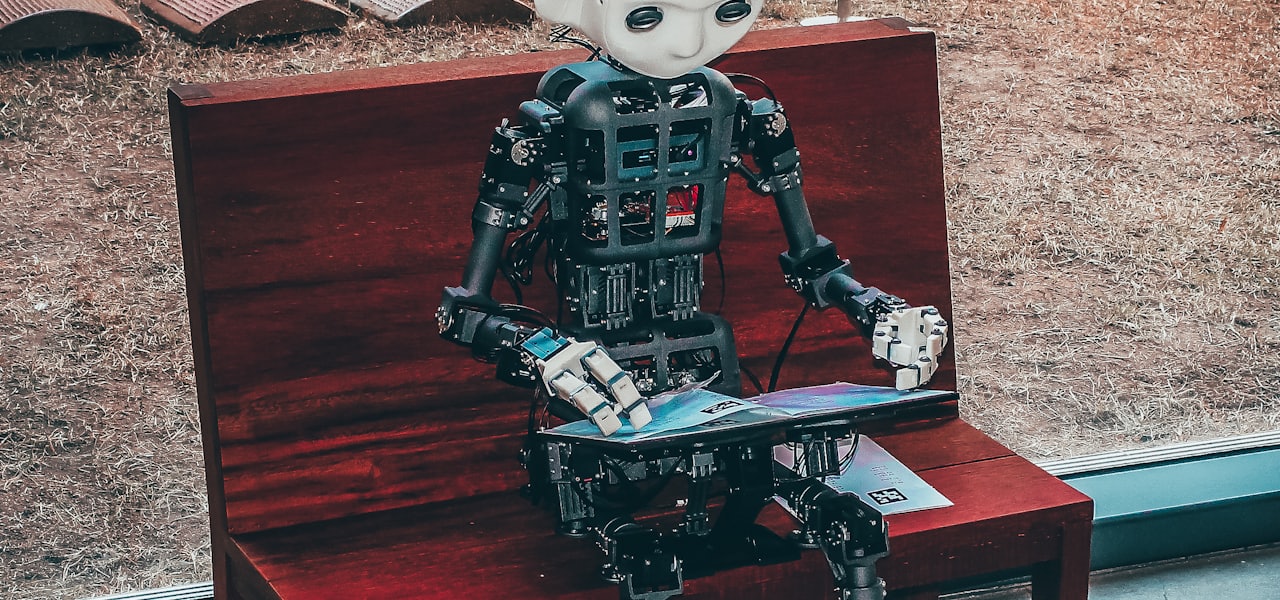
Clanker is a derogatory term for robots and artificial intelligence (AI) software. The term has been used in Star Wars media, first appearing in the franchise's 2005 video game Star Wars: Republic Commando. In 2025, the term became widely used to express hatred or distaste for machines ranging from delivery robots to large language models. This trend has been attributed to anxiety around the negative societal effects of AI. == In science fiction == The term has been previously used in science fiction literature, first appearing in a 1958 article by William Tenn in which he uses it to describe robots from science fiction films like Metropolis. The Star Wars franchise began using the term as a slur against droids in the 2005 video game Star Wars: Republic Commando before being prominently used in the animated series Star Wars: The Clone Wars, which follows a galaxy-wide war between the Galactic Republic's clone troopers and the Confederacy of Independent Systems' battle droids. In Star Wars media, robots—more commonly known as droids—are routinely depicted as the subjects of discrimination. For example, in the original Star Wars film, C-3PO and R2-D2 are abducted by Jawas and sold to the family of Luke Skywalker. When visiting a cantina in Mos Eisley, both droids are refused service by the bartender, who remarks that "We don't serve their kind." In Star Wars lore, the term clanker had entered use by the time of the franchise's High Republic Era and became prominent during the Clone Wars, in which clone troopers regularly use the phrase against battle droids. == AI backlash == The growing popularity of the term clanker reflects an increase in direct contact between people and AI systems. On sidewalks, delivery robots impede mobility and cause safety issues. In digital spaces, cybersecurity experts have raised concerns about the rising number of bots online, which now make up a large portion of internet traffic. A 2025 report estimated that about one in five social media accounts are automated. The term is also a reaction to AI advocacy from industrialists like Elon Musk and Sam Altman, who have championed the integration of AI into nearly every aspect of modern life. This includes efforts by major companies and startups alike, such as Amazon's development of humanoid robots to replace human workers in service industries. Such initiatives have further fueled public skepticism, reinforcing the association of clanker with unease over automation and the displacement of human roles. A global survey conducted by the research firm Gartner in December 2023 found that 64% of customers would prefer companies to avoid using AI in customer service, with another 53% stating they would consider switching to a different company if they discovered AI was handling their service interactions. Another report by Ernst & Young, published in July 2025, found that 42% of employees across Europe are worried that the use of AI in the workplace may threaten their employment. Criticism has also been directed at the technology itself. Some of the backlash stems from concerns about the resource consumption of AI systems, their frequent reliance on copyrighted material without consent, and questions about the intentions of the corporations behind them. There are also concerns about the potential cognitive effects of relying heavily on AI. A study, authored by researchers at Microsoft and Carnegie Mellon University, warns that regular dependence on AI may leave users mentally unprepared for real-world problem solving, likening the effect to cognitive atrophy. In June 2025, United States Senator Ruben Gallego tweeted that his "new bill makes sure you don't have to talk to a clanker if you don't want to", referring to proposed legislation that would require call centers to disclose their use of automated customer service agents to callers in the United States and offer the option to switch to a human representative. == Analysis == Linguist Adam Aleksic has described clanker as an evolution of racial slurs that anthropomorphize robotic systems. Internet memes incorporating the term often reference historical discrimination against marginalized groups such as African Americans. Based on the work of linguist Geoffrey Nunberg, American news website Axios has argued that clanker is merely a derogatory word, rather than a slur, because it does not perpetuate social inequities. NPR has noted the irony that the word robot was coined by Karel Čapek for his 1920 science-fiction play R.U.R. as a similar criticism of industrialization forcing workers to become devoid of their humanity. Aleksic has observed that robot can be further traced to the Proto-Slavic noun orbъ, which means 'slave'. While other science fiction media include pejoratives for androids and robots, such as skinjob and toaster from the Blade Runner and Battlestar Galactica franchises, respectively, clanker is believed to have gained popularity because its usage is intuitive and flexible. Whereas AI slop describes low-quality output from artificial intelligence, clanker belittles the underlying computer systems.